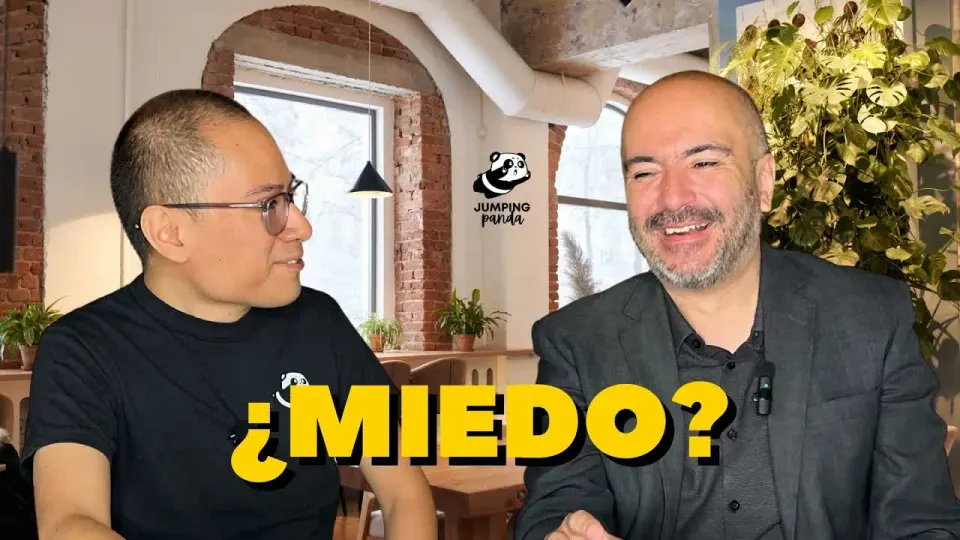
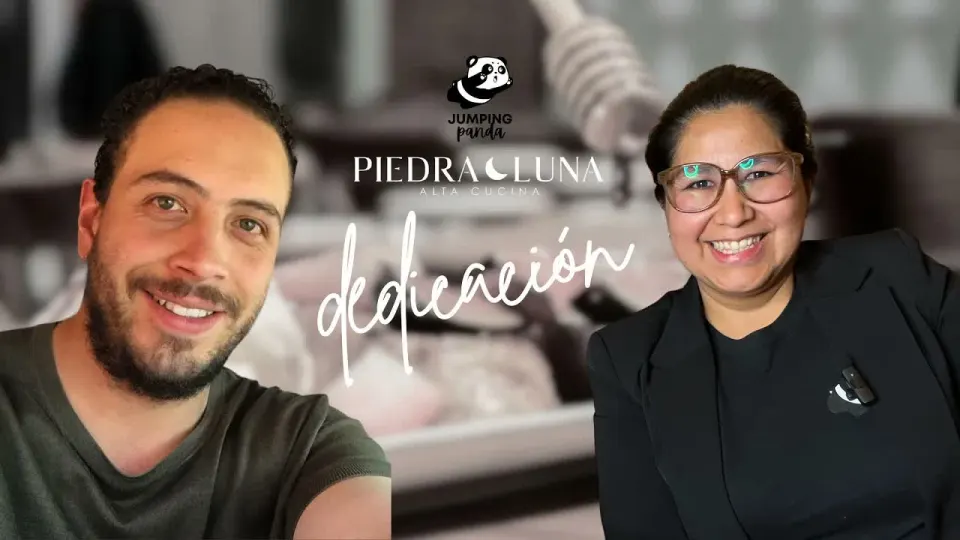
Violeta never planned to be a communications professional: her dad enrolled her in the program when she did not know what to study. She ended up falling in love with communications and, while still in school, started with some classmates what is today COMINT, an agency about to turn 15. In all that time, she has never worked at another company.
In the episode we talk about what almost nobody tells you about starting a business: how to price the intangible, what happens when there is no structure, when a team breaks apart and why partners can make or break a business. This is the short version.
The problems she faced
1.Putting a price on an intangible service
According to Violeta, what was hardest 15 years ago is still hardest today: costing services and showing the value of what they do. Unlike a cake, where you know what the flour costs, with a creative service you can almost set whatever price you want.
They lived it firsthand: some clients told them "you are too cheap, I am not going to hire you because it makes me distrust you" and others told them they were too expensive, for the same service. Their first clients asked for the quote in dollars, and they were left thinking they had undercharged.
2.Starting a business without structure
They started selling without a formal company: freelancer invoices, everything mixed together and no idea how to incorporate. Over the years they paid the price for those decisions, including bad advice from people who counseled them to "save" on tax matters.
Violeta says they are still correcting mistakes and paying for lessons from 15 years ago. That is why she does not recommend jumping in without thinking: not every success story should be a rule for others.
3.Treating the team like family without setting limits
This is what she considers the hardest challenge they have lived through. They wanted to create a family-company, with very close relationships with employees. At one point trust broke down with part of the team, boundaries were crossed and they had to part ways with practically half the staff overnight.
It put operations and even the company's stability at risk. Those who stayed, and some freelance allies, did everything, even recording videos at three or four in the morning. Violeta admits the regret: they saw what was happening and did not act in time.
4.Conflicts between partners
For Violeta, the main reason many small and mid-sized businesses fail is not a bad product or bad costing, but that the partners fight. COMINT started with four partners, one left early because she did not see quick returns, and the other three are still together. One of them was her college boyfriend, and today each is married to someone else.
Even so, she says they tell each other the truth with respect and with affection. They compared their relationship to having a personal coach who tells you "you talk too much" when needed.
5.Solving problems every day
Violeta sums it up this way: having a company means being in the business of solving problems all the time. A quiet month with nothing to solve does not exist. Either you solve the client's problem, or the internal team's, or any other.
She sees it as a skill you develop: every challenge you take on well gives you a tool for the next one, like in a video game.
6.Balancing creative direction with being a mom
Being a mom, she says, is "another company" where you are everything from director to security guard. Her balance used to be deciding whether to go to the movies or the gym; today it is getting done what needs to get done that day.
Working on something creative while a baby runs nearby is almost impossible for her, because the idea slips away. Her formula: structure and team.
What she learned (and it can save you years)
1.Cost with a rate sheet, not with intuition
COMINT developed a rate sheet with variables: estimated hours of work, the seniority of the role (an art director does not cost the same as a designer), the size and industry of the client. Handling the communications of a company with 10 people is not the same as one with 10,000.
They also look at how the market is doing and who their competition or substitute would be.
2.Show the client how much they lose by not hiring you
One piece of advice the consultants gave them is to cost it backward: calculate how much money the company loses each month if it does not hire you. That way the client stops wondering whether you are expensive or cheap and sees how much they can recover with you, and the investment becomes tangible.
3.Set healthy limits and speak plainly with your team
Today they are transparent: if someone no longer sees where to grow or is not comfortable, they tell them; and if they see that it is no longer the right place for them, they tell them too. That clarity is, for Violeta, setting healthy limits, and it has brought a stronger team and a structure that protects both the team and the clients.
4.Choose your allies and their values carefully
Her advice for people starting out: look very carefully at who your allies are. They can be partners, suppliers or collaborators, but they should share a vision of the future and a set of values, not just the ambition to do business. In her case, the three partners are very different in personality but agree on values, and that has helped them make decisions in bad times.
5.Build structure and your tribe
For balance, Violeta plans her day in blocks, keeps her priorities clear and relies on help at home, her family and a work team that covers for her when she has to be with her son. She also schedules daily time for him, even if she does not always keep it.
6.Seek validation and celebrate what you have achieved
After 15 years, what makes her proudest is still being standing, having won three AMCO awards, a recognition from experts in her field, and that her three partners are still her friends. Entrepreneurs hardly ever get applause, she says, so you have to give it to yourselves.
“Having a company means being in the business of solving problems all the time.”
Is something like this happening to you?
If you offer services or work with partners and a team, go through these questions:
Listen to the full episode
This is only a summary. The full conversation has many more details, stories and tips. Watch it in full on YouTube (it is recorded in Spanish; turn on the captions and choose Auto-translate to read it in English) or find every episode on the Pandas Creativos podcast page (in Spanish).
Book a free 30-minute strategy call and we will go over how to better communicate what you do, to attract clients who value your work.
Get my free strategy call →