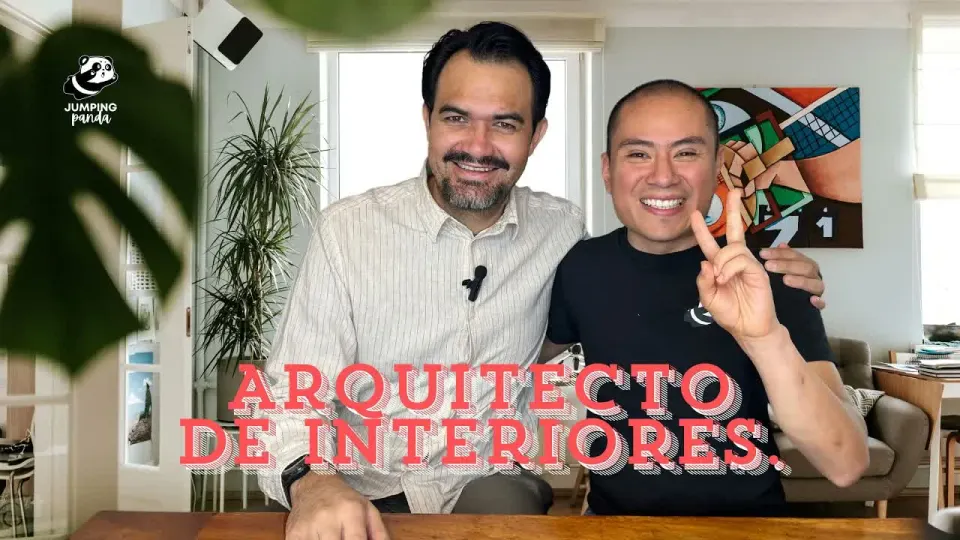
Christian studied business computing and started out at a call center. Today he has more than 20 years in technology and infrastructure and is a manager. He describes himself, more than as an IT person, as someone who specializes in customer service, both internal and external.
In the episode we talk about his path: from selling by phone to coordinating projects, from learning to be a manager "the hard way" to his own Dutch-style potato business that the pandemic made unsustainable. His motto is simple: you have to lose your fear of change.
The problems he faced
1.Believing you have reached your ceiling
Ten years ago, Christian thought his career had already reached "Everest" and that from there it was only downhill. He was wrong: he climbed three or four more steps, and each one changed his perspective on the company, the business and his own work.
2.Working only to clock your hours
He used to think like a lot of people: arrive at 9 and leave at 6. Today, from the side of the person who manages, he values the team members who go the extra mile: the ones who ask "what else can I help you with?" before leaving. He says there is nothing wrong with having set hours, but your bosses notice who shows that proactivity.
3.Urgent, angry or rushed customers
At the call center he worked in sales and then in complaints, where he had a goal: out of every 10 calls, convince eight customers not to cancel their insurance. There he learned tolerance and negotiation. At his next company he coordinated between the warehouse, engineers and customers, and became "the glue" between everyone.
One lesson he keeps repeating: understand why it is urgent for the customer. A stuck email can cost the company millions, so five minutes of a service is not the same for everyone. His rule is to never hang up without giving an answer, and to stay with the case until it is resolved.
4.Becoming a manager without knowing how to lead
He lived his first manager job "the hard way": he did not know how to be a manager, people did not listen to him and he did not stand firm. One day he noticed that even his own boss did not see him as a manager. He says it was a sign he was not ready, and he changed companies.
At his next job he arrived better prepared, with clear rules and explaining to his team the reason behind each request. A phrase from another boss stuck with him: "you do not have to be a tyrant, but you do not have to be their dad either".
5.No longer doing what you know how to do
Christian started out fixing computers: formatting laptops and swapping hard drives. For about 10 years now he has not touched a screw. With each promotion, the company asks for different things: reports, contracts, budgets and three-to-five-year strategic plans.
6.Starting a business without backup or agreements
He had a Dutch-style potato business while he was working, as a second source of income. It was going well, but then the pandemic hit and it became unsustainable. His most important lesson: you cannot do it alone. He depended on his mom, friends and relatives to run it while he worked.
He also learned, from a boss's advice, that in business you should "sign your divorce before you sign the marriage".
7.Changes that arrive without warning
Christian has lived through projects that end and positions that disappear. Once he showed up to work in the morning and by 10 he was at a lawyer's office signing his exit. It hurts, and so does the financial loss, but he takes it as a lesson: "change gears, not reverse".
What he learned (and it can save you years)
1.Sign your "divorce" before the "marriage"
If you are going into partnership, even with a friend, put it in writing before you start: how much each person puts in, what each one is responsible for, what happens if the business grows and what happens if it blows up. Money can ruin a friendship if there are no clear rules. And since not all of us know contracts, find a lawyer, an accountant or someone who has already done it.
2.Lose your fear of change
This is his second pillar. A change can be a job, a city or responsibilities. If you are no longer comfortable, send out your résumé: he once sent about 50 a week, and maybe only two people will call you back, but one may be the right one. The change, he says, should always be a small step up.
3.Prepare yourself and raise your hand for training
His first pillar is preparing yourself: studying, getting certified and asking for courses at your company. Anyone can learn the operational side, but soft skills, like negotiation, time management and customer service, are what open the door to leadership roles.
4.Learn English
His third pillar is language. He says he won his first promotion over colleagues with more seniority because the position required writing and speaking daily with people in other countries. He recommends losing the fear: watch series without subtitles or with English subtitles, listen to audiobooks and absorb it little by little.
5.Serve people the way you would want to be served
His method: listen, give an answer that calms the person and follow up personally on the case. He says some customers ask to be served only by him, because they feel he understands them. For him, human treatment and patience are the foundation of any service.
6.Work to live, do not live to work
This is the question he asks himself to stay balanced. The company is cold, it thinks in numbers, and it should be the means to reach your personal life and your goals. Be committed, but know your limit.
“In business you have to sign your divorce before you sign the marriage.”
Is something like this happening to you?
Before you partner up, get promoted or change direction, ask yourself:
Listen to the full episode
This is only a summary. The full conversation has many more details, stories and tips. Watch it in full on YouTube (it is recorded in Spanish; turn on the captions and choose Auto-translate to read it in English) or find every episode on the Pandas Creativos podcast page (in Spanish).
Book a free 30-minute strategy call and we will go over your next steps together, so you take them with a strategy.
Get my free strategy call →