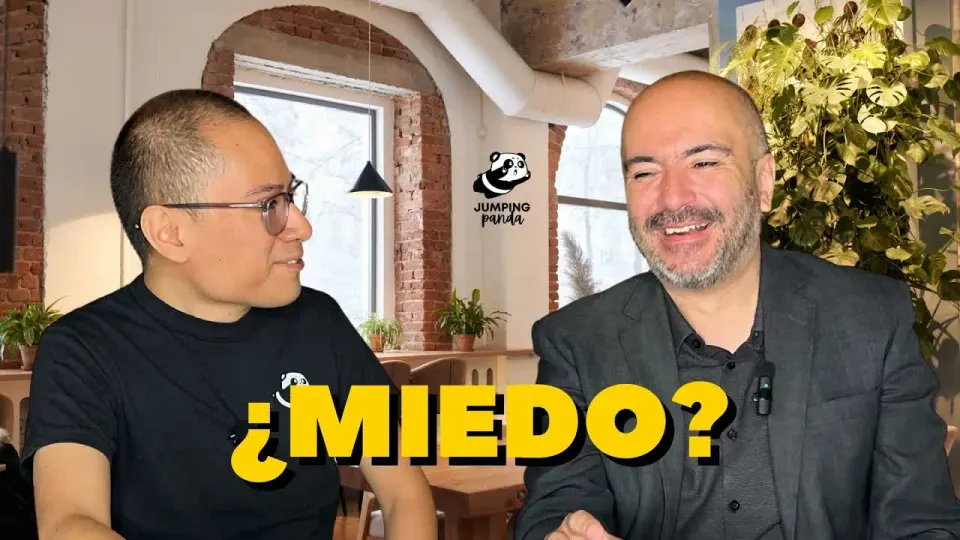
Sarai is the only woman among four brothers and studied business administration. During summers in college she helped her dad at the family company that manufactures and repairs wooden pallets for industrial use, the kind you see in supermarkets. When she graduated, she joined it in a new role, with no manual and no precedent.
In this episode she told us what almost never gets talked about in family businesses: how to earn respect when you are "the daughter", what to do when you do not get the position you expected, how to lead a team without hurting anyone and how to separate family from business in a meeting room.
The problems she faced
1.Stepping into a role that did not exist, with no manual
Sarai joined as an import assistant, in a department that was only just being formed. She had to learn on her own about customs, tariffs and taxes, negotiate with suppliers abroad and overcome fears like speaking on the phone or writing an email in English. At that moment she felt she had been "sent to war without weapons".
Thanks to executives and a coach who told her "I will walk you through it, but you figure it out", she built the area from scratch. She says it was almost a second degree and it taught her discipline and organization.
2.Having the promotion you expected taken away
When the purchasing manager position opened up, she was the natural candidate. But management hired someone with no experience in the area, and Sarai kept doing much of the work without the title. It was an emotional and professional blow.
Over time, the administrative manager role opened up, which was more closely tied to her degree, and she grew there. Today she is part of the company's strategic committee.
3.Earning respect when you are "the daughter"
Sarai says it was harder to work with her dad than with her partner, and the hardest part was shedding the label of "the daughter". She had to prove with results that she deserved her place, work harder than her brothers and make herself noticed.
On top of that, because she is a woman and young, some customers and suppliers from older generations doubted that she was the manager. They thought she was there "until she gets married".
4.Leading a team and communicating without hurting
Leading people was the hardest thing to learn. She speaks directly and with a firm voice, and noticed her tone hurt some people. With her coach's help she learned to observe how each person communicates and adjust, and also to change her words: saying "there is room for improvement" instead of "you made a mistake", or asking someone to repeat back what they understood to make sure it was clear.
5.Bringing relatives into the company without a filter
In a family business it is common for a relative to come asking for work and be let in out of affection. If the relative makes a mistake or the relationship ends, the break becomes personal.
Her company changed: now they have structure, policies, processes and corporate governance. A relative who wants to join goes through the hiring process, submits a résumé and takes psychometric tests, like any other candidate.
6.Separating family from business in the meeting room
When the siblings and the founder meet, they sometimes get lost in family topics like the nephews and nieces, and when they argue, every comment can feel personal. Today their partner meetings have an agenda and set items to cover, although they admit more work is needed to follow up on agreements.
A big challenge remains: generational succession, when the members who joined with the founder reach the end of their time at the company.
7.Balancing work life and motherhood
Sarai questions the idea of perfect balance: she says it does not exist, that it is a romanticized concept. What she does is decide each day what to prioritize. There are weeks with a lot of work and others where she makes up for it with family.
She also talked about the guilt of being a mom and working. She prefers to ask herself why she feels it and remember that she is doing what she loves.
What she learned (and it can save you years)
1.Find guides and learn on your own
Nobody learns from someone else's mistakes, says Sarai, but having someone who backs you up makes the difference. Her mentors let her figure things out, but were right behind her in case she fell.
2.Do not take it personally
One of the pieces of advice that helped her most: nothing in the professional world is personal. We are all pursuing a goal, and the other person may bring their own emotional problems.
3.There is more than one path
When she was not given the position she expected, she learned to be more flexible: there are many ways to get where you want to go, and if one door closes, another opens.
4.Professionalize the family business
Clear policies, defined roles, a hiring process that is the same for everyone and meetings with an agenda prevent many problems among relatives. Her dad, the founder, joined that change process while still active.
5.Support other women and moms
At her company they aim for women's participation close to 50%, based on skills. Sarai also tries to be flexible with moms: let them take care of their kids and make up the time later. She says that what you give your team does not have to be financial and that they appreciate it a lot.
6.Ask for help and take the leap, but prepare
For anyone just starting out, her advice is not to be afraid, set a goal, prepare and jump in. And above all, ask for help: nobody knows everything, and often the person who seems out of reach is the one who can support you most.
“Dare to do what few dare to do.”
Is something like this happening to you?
If you work at a family business or have one, go through this list:
Listen to the full episode
This is only a summary. The full conversation has many more details, stories and tips. Watch it in full on YouTube (it is recorded in Spanish; turn on the captions and choose Auto-translate to read it in English) or find every episode on the Pandas Creativos podcast page (in Spanish).
Book a free 30-minute strategy call and we will go over together how to structure your business and attract more customers.
Get my free strategy call →