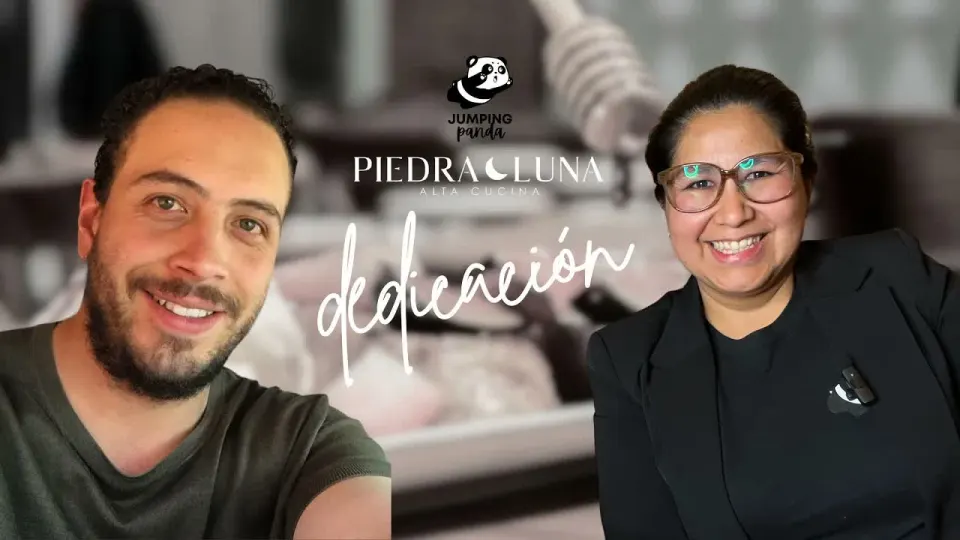
Rafa studied business administration and worked in logistics at a large company. After a health setback, he moved back into his parents' house with no job and no plan. A family friend told him: "why do you not sell meat?". His first reaction was embarrassment: "how embarrassing". Today he owns JESCA, a distributor that supplies restaurants, and says he is proudly a meat merchant.
In this episode he told us, very honestly, how he sold his first 5 kilos to a neighbor and how he grew from there. He also told us about two hard blows that made him tougher: an online scam and a customer who stopped paying. If you sell to other businesses, this is for you.
The problems he faced
1."What will people say" and the stereotype of your trade
Rafa had friends who were already managers and jokingly called him "Rafa the butcher". Letting what people think get to him weighed on him at the start. Over the years he understood that you should be proud of what you do if it is good for you and for society, and that trade is a noble craft.
2.Tiny margins and tons of competition
His first sales earned him just a small profit per kilo, sometimes not even enough for gas. And in any neighborhood there are several butcher shops. His answer: make a plan, go out knocking on doors and ask what his added value is. For him, something as simple as punctuality and keeping quality up already makes a difference.
3.Getting comfortable selling in your neighborhood
After a few months, Rafa was selling to neighbors and a small food stall, living with his parents and had a comfortable life. It was his mom who pushed him out of his comfort zone with a direct message: he had to go out and sell. It was a reality check, and that is when he started looking for bigger customers.
4.Not knowing how to answer when a big customer arrives
To get into a large restaurant, he messaged an acquaintance who worked in purchasing several times, until they called him. The interview with the chef was a blow: the chef asked about quality, certification, origin and how long the meat had been frozen, and Rafa did not know how to answer.
He did not give up: he studied everything from raising cattle to certifications and looked for suppliers for what they asked. The first big order came after a year and a half of trying.
5.An online scam
Excited about growing, he saw a supplier on Facebook offering pork at half the market price. The supplier sent photos of the ranch, the route and even messages that he was almost there. Rafa had already sold the product to a customer who paid in advance. The supplier never arrived and blocked him. He lost his savings and let his customer down.
What surprised him most was that customer's reaction: after scolding him, the customer guided him and explained how not to fall for it again. Rafa learned to ask for documents, proof the supplier is real and to get better advice.
6.A customer who does not pay
A restaurant asked him for more product in December and agreed to pay in January. The debt kept piling up and the customer kept ordering. When Rafa finally told him he would have to take legal action, the customer got upset, closed the business and disappeared. Rafa started a legal process and managed to locate him years later in another city, but to this day he has not recovered that money.
His reflection: setting limits is allowed too, even with big customers, and you have to do your research before extending credit.
7.The pandemic and the temptation to cheat
When restaurants and hotels closed, Rafa was left with frozen meat in storage and customers who were not paying. He started portioning the meat to sell to households and delivering orders of one or two kilos, even if it cost him more in gas than he earned.
He also remembers another test: some people pressed him to buy domestic beef and sell it as Angus. It was easy money, but he decided not to do it. If you get caught, he says, the best marketing becomes the worst, because the same customer can sink you.
What he learned (and it can save you years)
1.Swap "why did this happen to me" for "what is this for"
After every blow, Rafa asks himself what he has to learn. It was a piece of advice he repeated: getting out of problems is up to you, and every stumble teaches you, for example, not to trust just anyone.
2.Your best marketing is a satisfied customer
If you do your job well, they recommend you. Rafa builds relationships before selling: chatting, getting to know the customer and being kind, instead of pushing "buy from me". Restaurants have a lot of turnover, so a waiter who knows you today may recommend you from another restaurant tomorrow.
3.Study what you sell
Rafa says you really start studying when you get out into the world. The work itself gives you the knowledge, and big customers force you to know where your product comes from and how it is handled.
4.Learn to delegate and set limits
At first he did everything himself: purchasing, sales and invoicing. It was hard to let go for fear his team would take his customers, but he understood that without delegating there is no growth. He also set limits for his business, like selling by the sealed case and not opening cases for very small orders.
5.Protect your ethics so your business lasts
Between earning a little and earning a lot by cheating, Rafa chose for the business to last. His philosophy is that life is an orchestra that needs a conductor, and that you should not rush any instrument.
“The best marketing can come from your customer.”
Is something like this happening to you?
Before your next big sale or your next purchase from a new supplier, check the following:
Listen to the full episode
This is only a summary. The full conversation has many more details, stories and tips. Watch it in full on YouTube (it is recorded in Spanish; turn on the captions and choose Auto-translate to read it in English) or find every episode on the Pandas Creativos podcast page (in Spanish).
Book a free 30-minute strategy call and we will go over together how to attract better customers with a clear strategy.
Get my free strategy call →