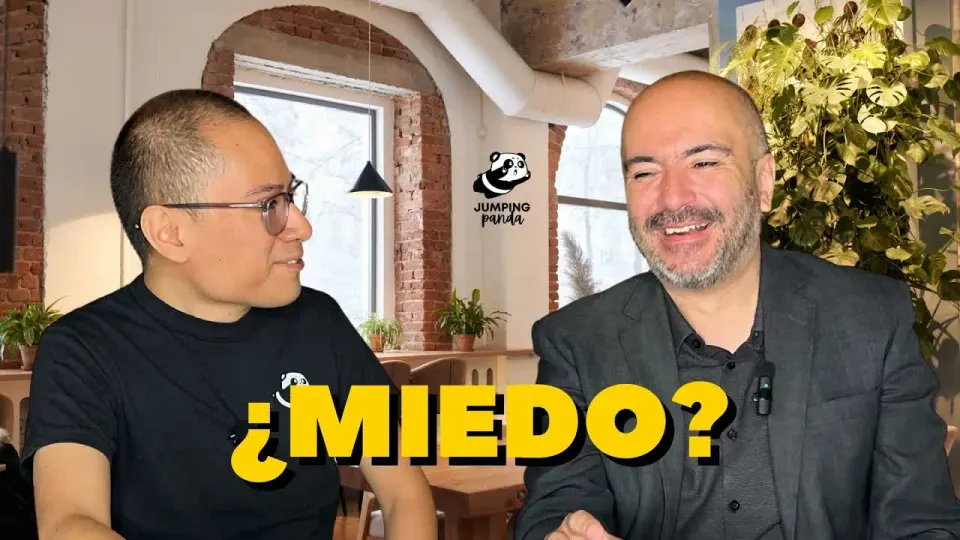
This was the first episode of Pandas Creativos: the three of us, Chio, Erci and Roberto, introduced ourselves before we started interviewing other entrepreneurs. Chio and Roberto have been starting businesses together for 12 years, from a shop in downtown Metepec where they sold little bags of candy to custom mugs, coffee shops and e-commerce.
Jumping Panda was born in February, when a friend told them: "jump in and start teaching courses". Today they teach people how to sell online, and Erci, who joined as the third partner, completes the team. In this episode they share what they learned along the way, mistakes included. If you are just starting out, read this and save yourself years.
The challenges they have faced
1.Waiting for everything to be perfect
In almost all of their businesses, says Roberto, they focused on the logo, the typography and the presentation, trying to make everything extremely perfect. The reality is that it will never be perfect. His advice: just launch. If something is missing, nobody is going to judge you.
2.Sitting in your shop waiting for customers to show up
Roberto spent a lot of time "planted" in his shop in Metepec. A friend told him he had to go out and sell, because that is the whole point of a business. When he did, he discovered another world: buyers, companies and contracts.
It was not easy. He landed a contract to sell mugs to a company, but they turned him down more than 50 times, and he had to go back and forth about 10 times to deliver the first order because of missing paperwork, a missing purchase order and other things. The story ended with the satisfaction of having "hunted" the buyer until he got it done.
3.Doubting that you can sell online
Chio admits that for years she did not believe in e-commerce: "how are they going to see the product?". Roberto had been passionate about it for years, but it scared him because it seemed complex and expensive, and he admits he spent a lot of money at the start. Today he knows you do not need to spend that much.
The pandemic forced them to try: either they sold or they did not eat. They even started selling a pie nationwide, and they learned how to pack, ship and protect a product until it arrives in good shape.
4.Having to close a business that is doing well
Chio had coffee shops that were already working and that people knew for their service and networking. When the pandemic hit, they had to close. She went through every stage of grief, but today she believes that without the pandemic they would have more locations, and she gives herself credit for what she built.
5.Feeling like an impostor
Chio admits that sometimes she feels like a fraud and asks herself "what have I done with my life?", even after 12 years of starting businesses. Her answer is to believe it: "I did that". Erci remembers that as a child she was shy and insecure, and that selling pork rinds outside her school was one of her greatest achievements, because it proved to her that she could do it.
6.Comparing yourself to others
Chio warns that you should look at your competition, but not compare yourself to it: you have a differentiator that belongs only to you, and you will take it with you into any business you run.
7.Balancing life and guilt
Chio says that since she had kids it is hard for her to disconnect: when she is recording, she thinks she should be with them, and when she is with them, she thinks she should be working. Her message for anyone going through the same thing: do not feel guilty, you are doing the best you can.
What they have learned (and it can save you years)
1.Go out and sell
This is Roberto's advice: start selling your project, and everything else will fall into place. Once there are sales, there is income to improve everything, and people join in. If they had stayed seated waiting, he says, they would not be where they are.
2.Start even if it looks ugly
One idea helped Roberto: "somebody already did it ugly and is doing great". He says perfection is the enemy of getting started. He means getting yourself to go for it, not doing things badly.
3.Build a team that complements each other
Roberto is the one who researches, calculates costs and handles logistics. Chio and Erci bring the creative side and customer service. The businesses that have worked best, they say, are the ones where everyone took their own role and is an expert in what they enjoy.
4.Share what you know
Jumping Panda was born from wanting to share what they learned so that other people's road is shorter: not 12 years, but maybe 12 months. Erci remembers that Chio taught her: give it away, and it comes back to you multiplied.
5.Learn to disconnect and to prioritize
For Roberto, the most important thing for balance is knowing how to disconnect: reading, walking, playing with your kids. Erci uses a color-coded calendar and always gives her family their own color, so she never loses sight of what matters. They also remind us that resting is productive.
6.It is never too early or too late
Erci offers an image for taking the first step: when you are standing and you lean forward, your body either takes the next step or you fall, and if you fall, you get up and keep going. You can start at 15 or at 70, she says, from home and with what you have.
“Start selling your project: everything else will fall into place.”
Is something like this happening to you?
Before you launch or relaunch your business, go through this list:
Listen to the full episode
This is only a summary. The full conversation has many more details, stories and tips. Watch it in full on YouTube (it is recorded in Spanish; turn on the captions and choose Auto-translate to read it in English) or find every episode on the Pandas Creativos podcast page (in Spanish).
Book a free 30-minute strategy call and we will work out together how to get out and sell with a realistic plan.
Get my free strategy call →